
This article is intended for sales engineers and service technicians, providing a simple, clear understanding of Hot Gas Reheat (HGRH) to support effective communication and troubleshooting.
Background
Hot Gas Reheat (HGRH) is a dehumidification method that uses heat from the refrigeration cycle to reheat air after moisture has been removed. Instead of relying on electric heaters, it recovers heat from the compressed refrigerant, making the process more energy efficient.
In school HVAC applications, HGRH is especially important due to high ventilation requirements and varying occupancy levels, both of which introduce significant moisture into the space. It allows systems to control humidity effectively without overcooling classrooms, helping maintain comfort, improve indoor air quality, and prevent issues like mold growth.
What is Hot Gas Reheat (HGRH)?
Hot Gas Reheat (HGRH) is a dehumidification method that uses recovered heat from the refrigeration cycle to reheat air after it has been cooled and dehumidified. Instead of rejecting this heat outdoors, it is reused within the system to condition the supply air.
How is HGRH different from electric reheat:
- Hot Gas Reheat uses heat derived from compressed refrigerant rather than electric heating elements
- Provides better energy efficiency by reusing available heat
- Maintains comfort by avoiding overcooling while still removing moisture
3. How Hot Gas Reheat Works
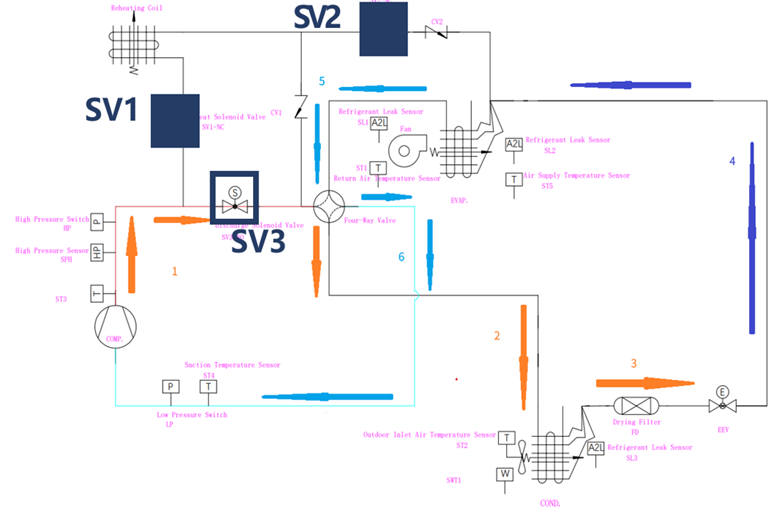
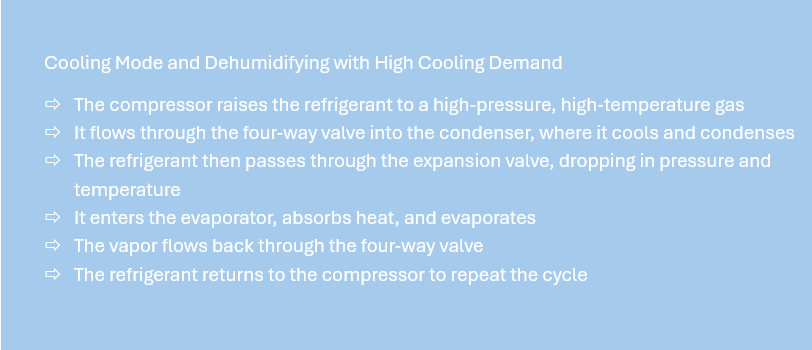
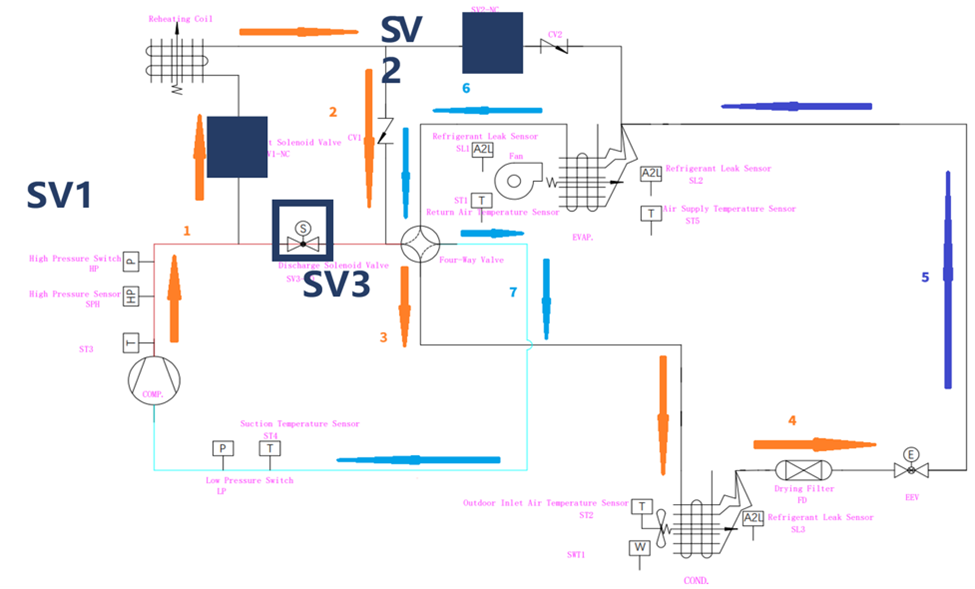
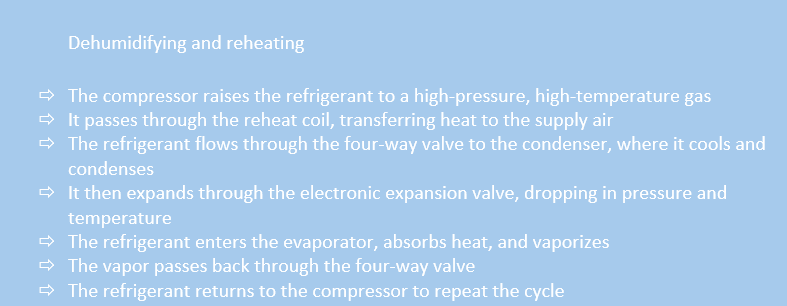
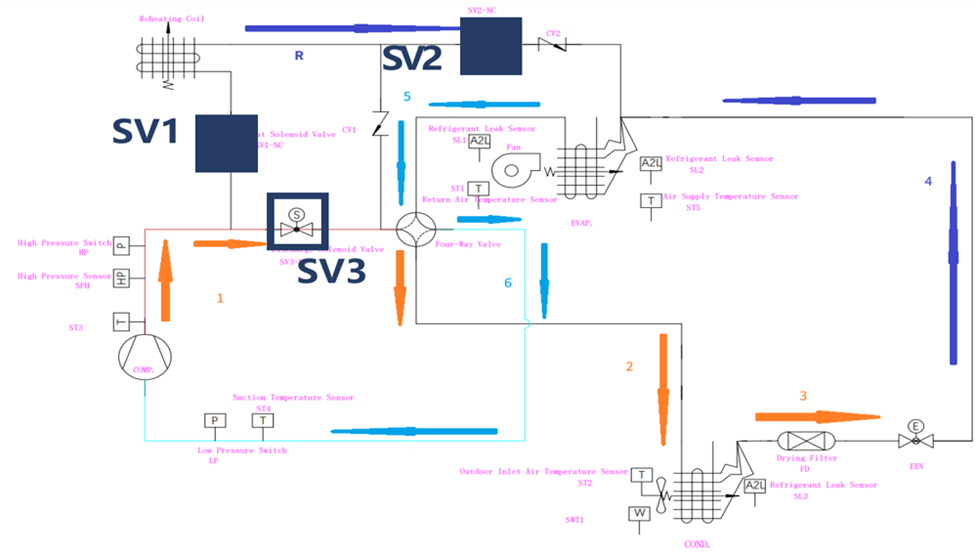
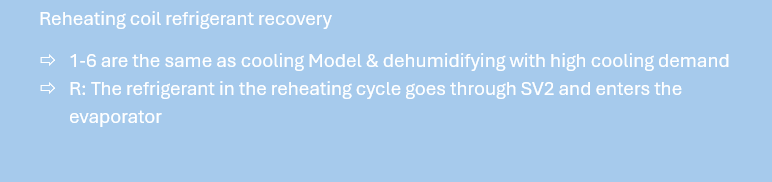
Air initially passes over the evaporator coil, where it is cooled below its dew point, causing moisture to condense and be removed. The resulting air is cold and dry, but too cool for comfort, so it continues to the reheat section. There, hot refrigerant gas from the compressor flows through the reheat coil, warming the air to a comfortable supply temperature before it is delivered to the space.
- HGRH reduces humidity without overcooling the space while maintaining comfortable Supply air temperature improving occupant comfort
- HGRH provides strong latent (moisture) removal while reusing waste heat, minimizing additional energy use compared to electric reheat.
- Integrated with variable speed compressors and fans, Hot Gas Reheat provides smooth, stable operation, allowing precise control of both temperature and humidity across varying load conditions.
Why schools benefit:
Schools bring in large amounts of outside air (OSA) to meet IAQ standards, which often introduces moisture—especially in humid climates. Hot Gas Reheat helps manage this added latent load effectively, maintaining proper humidity is critical for comfort, health, and preventing mold. HGRH supports stable indoor conditions throughout the day.
- Enables precise control of cooling and reheat through variable speed compressors, allowing the system to match both temperature and humidity demands.
- Works alongside ventilation systems to handle the added moisture load from outside air while maintaining supply air temperature.
- Supports dedicated dehumidification operation when humidity control is needed without significant cooling demand.
When is HGRH Applicable
HGRH is essential in regions with high outdoor moisture, where latent load is a major portion of the cooling demand.
Recommended for systems with significant outside air intake, which introduces additional humidity that must be controlled.
Ideal for schools and similar environments where maintaining consistent indoor humidity is critical for comfort, IAQ, and mold prevention.